
Introduction
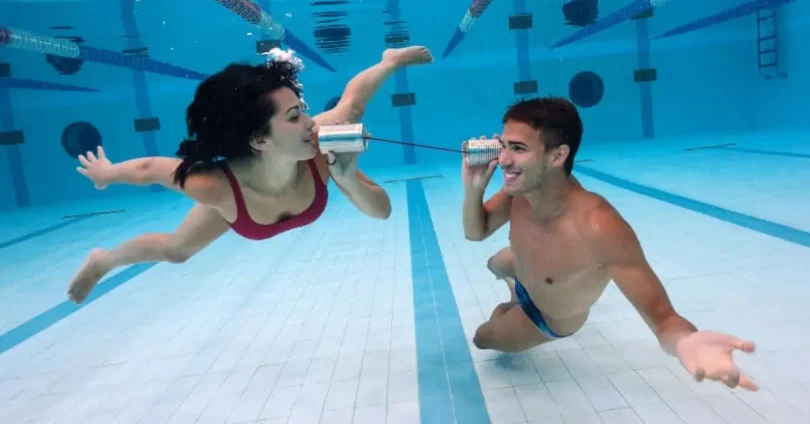
Have you ever noticed how your voice Sound Travel when you try to talk underwater? Or wondered why divers often rely on hand signals instead of speaking? The way sound travels changes dramatically depending on the medium it moves through. Air, water, solids—they all carry sound at different speeds. Understanding these differences isn’t just a curiosity; it has real-world implications for marine life communication, underwater technology, and even our everyday experiences near water.
One of the most intriguing questions in physics is: does sound travel faster in water or in air? At first glance, it might seem counterintuitive. After all, water is denser than air—wouldn’t that slow sound down? As it turns out, the answer lies in how sound waves interact with the density and elasticity of the medium.
In this article, we’ll explore the science behind sound propagation in air and water, why water allows sound to travel faster, and the fascinating ways this principle impacts the natural world and human technology.
Basics of Sound
Sound is all around us, yet it’s easy to overlook what it really is. At its core, sound is a vibration that travels through a medium—such as air, water, or solid objects. When an object vibrates, it pushes and pulls the particles around it. These tiny disturbances ripple outward as sound waves, carrying energy from the source to our ears or measuring instruments.
How Sound Travels
Unlike light, which can move through a vacuum, sound needs a medium. In air, sound waves compress and expand the molecules, moving from one particle to the next. In water, the same principle applies, but the particles are packed closer together, which makes the wave travel more efficiently.
Key Factors Affecting Sound
Two main properties of a medium determine how fast sound travels:
- Density – This is how tightly packed the particles in a medium are. Denser materials have more particles to transmit the vibration, but density alone doesn’t tell the whole story.
- Elasticity (or Bulk Modulus) – This measures how easily a medium can return to its original shape after being disturbed. The higher the elasticity, the faster the sound can propagate.
By understanding these basics, we can start to see why sound behaves very differently in air and water, setting the stage for a deeper dive into the actual speed differences.
May You Like It
Travel Agency – Expert Guide to Choosing the Best Services for Stress-Free Trips
Gate 1 Travel – Affordable Global Tours And Vacation Packages
Costco Travel 2025 – Exclusive Deals
Speed of Sound in Air vs. Water
Sound travels at different speeds depending on the medium it moves through. Let’s break it down:
| Medium | Approximate Speed of Sound | Key Factors Affecting Speed |
| Air (at 20°C / 68°F) | 343 m/s (1,125 ft/s) | Low density, moderate elasticity |
| Water (freshwater at 25°C / 77°F) | 1,480 m/s (4,856 ft/s) | Higher density, higher elasticity |
| Seawater (average 20°C / 68°F, salinity 35 ppt) | 1,500 m/s (4,921 ft/s) | Salt increases density slightly, elasticity remains high |
Key Takeaways:
- Sound moves over four times faster in water than in air.
- Even though water is denser, its higher elasticity allows sound waves to travel more efficiently.
- Salt in seawater slightly increases density, but the speed of sound remains very fast compared to air.
Understanding these numbers helps explain why marine animals like whales can communicate across vast ocean distances, and why sonar systems are so effective underwater.
Why Sound Travels Faster in Water
At first glance, it might seem surprising that sound travels faster in water than in air. After all, water is denser—shouldn’t that slow the waves down? The answer lies in a combination of density and elasticity, two key physical properties that determine how quickly sound can move through a medium.
Density
Density refers to how closely packed the molecules in a substance are. In water, molecules are much closer together than in air. While higher density can sometimes slow down sound because molecules resist movement, in water the effect is offset by its high elasticity.
Elasticity (Bulk Modulus)
Elasticity measures a medium’s ability to return to its original shape after being disturbed. Water is highly incompressible compared to air, meaning it resists changes in volume. This stiffness allows sound waves to propagate much more efficiently, making them move faster.
The Combination Effect
The speed of sound in a medium depends on both elasticity and density, typically calculated with the formula:
ρ is higher), its bulk modulus is disproportionately higher, which results in a much greater speed of sound. In simple terms: water’s “stiffness” more than makes up for its density.
Everyday Analogy
Think of a tightly packed spring (water) versus a loosely coiled spring (air). If you push one end, the wave travels faster through the tight spring because the coils quickly push on each other. Similarly, sound travels faster in water because its molecules transmit vibrations more efficiently.
Real-World Implications of Sound Speed in Water
The fact that sound travels faster in water than in air isn’t just a scientific curiosity—it has practical consequences in nature, technology, and everyday life.
- Marine Life Communication
Many marine animals, including whales, dolphins, and seals, rely on sound to communicate, navigate, and locate prey. The faster propagation of sound in water allows these animals to send signals across kilometers, something impossible in air. Some whale songs can travel over 20 miles underwater thanks to this property. - Sonar and Navigation Technology
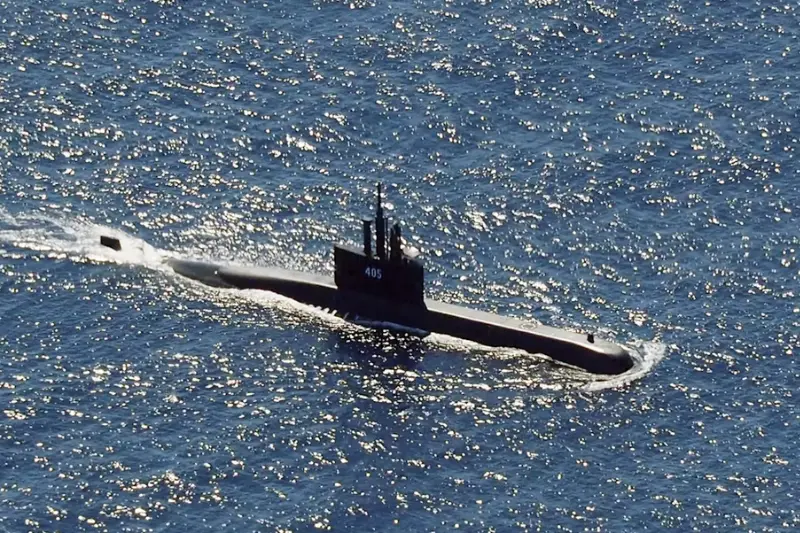
Submarines, ships, and underwater drones use sonar systems to detect objects, map the seafloor, and navigate safely. Sonar works by sending sound waves and measuring how long they take to bounce back. The speed of sound in water is critical for calculating distances accurately. Faster sound speeds allow sonar to provide real-time, precise information, essential for safety and exploration. - Underwater Construction and Engineering
Engineers designing underwater structures, pipelines, or tunnels need to understand how sound behaves in water. Acoustic measurements help monitor structural integrity, detect leaks, and even study underwater earthquakes. Knowing that sound travels faster in water allows for more accurate monitoring and safer construction practices. - Scientific Research and Exploration
From studying ocean currents to mapping the deep sea, scientists rely on the efficiency of sound in water to gather data. Tools like hydrophones and underwater microphones capture acoustic signals from marine life or geological activity, giving researchers insights that would be impossible above the surface. - Everyday Human Experiences
Even for recreational swimmers and divers, the faster travel of sound underwater affects how we perceive noise. Voices sound muffled and directionally confusing because our brains are tuned for sound in air, not water. Understanding this can improve safety and communication underwater.
May You Like It
Stanley Recalls Travel Mugs – 2.6M Affected Models
Viator Travel Agent 2025 – Expert Tips for Booking Tours
Pharma Wisdom – Guiding the Future of Pharmacy
Thought Experiments & Analogies
Sometimes, the fastest way to understand a scientific concept is through everyday analogies. Let’s explore why sound travels faster in water using relatable comparisons.
The Slinky Analogy
- Imagine holding a slinky toy stretched between your hands. If the coils are loosely spaced (like air molecules), a push from one end travels slowly along the slinky. Now, compress the coils tightly together (like water molecules). The same push travels much faster because each coil immediately pushes the next one.
- This simple experiment demonstrates how density and elasticity work together: tightly packed, elastic molecules transmit vibrations more efficiently, just like water does for sound.
The Traffic Analogy
Think of cars on two roads:
- Air road: Cars are far apart, moving cautiously. A message passed from car to car takes time.
- Water road: Cars are closer together and highly responsive. Messages pass almost instantly.
- Sound behaves : similarly in water. The closer spacing of molecules and their responsiveness allows vibrations to move quickly.
Everyday Observation: Talking Underwater
Ever tried talking underwater? Your voice sounds muffled, yet it travels farther than you might expect. That’s because your ears and brain are adapted to air, not water. Sound in water reaches distant points faster and more efficiently, even if it sounds distorted up close.
Imagine a Concert in Two Mediums
Picture a drumbeat: in air, it spreads slowly, and people far away might hear it faintly. In water, the same drumbeat would travel faster and reach distant listeners clearly. The medium’s properties completely change the experience of sound.
This section helps readers visualize abstract physics concepts, making your article more engaging and shareable.
Frequently Asked Questions (FAQs)
Can humans hear underwater?
Humans can hear underwater, but not very well. Sound travels faster in water, and our ears are adapted to air. This makes underwater sounds muffled and hard to localize. Specialized underwater hearing devices or hydrophones are needed for clear perception.
Does temperature affect the speed of sound in water?
Yes. Higher temperatures increase the speed of sound in water because the molecules move more actively, slightly increasing elasticity. Colder water slows it down a bit, though it’s still much faster than sound in air.
Why does sound seem muffled underwater?
Even though sound travels faster in water, your ear structure is optimized for air, not water. The different densities and impedance between water and your eardrum cause sounds to lose clarity and directionality.
Can sound travel farther underwater than in air?
Absolutely. Water transmits sound efficiently over long distances. For example, whale songs can travel tens of kilometers underwater, something impossible in air at the same intensity.
Is sound faster in seawater than in freshwater?
Yes, but only slightly. Seawater is denser due to salt content, which slightly increases the speed of sound compared to freshwater, but both are much faster than air.
Conclusion
Sound behaves in fascinating ways depending on the medium it travels through. In water, sound moves over four times faster than in air due to the combination of higher elasticity and molecular density. This simple principle has far-reaching implications, from the way whales communicate across oceans to the operation of sonar technology and underwater engineering.
Understanding why sound travels faster in water also helps explain everyday experiences, like why voices sound muffled underwater, and inspires creative analogies, like the slinky or traffic comparisons, making abstract physics more relatable.
In essence, water doesn’t just carry sound—it amplifies the reach and efficiency of vibrations, making our oceans not only a habitat for life but also a vast natural network for communication and exploration.
By grasping these principles, we gain a deeper appreciation for both the science of sound and the hidden ways nature optimizes it.
May You Like It
Time Travel Movies – Top Films, Science And Cultural Impact
Travel Food Services IPO GMP – Listing And Key Insights
UK Travel Advisory 18 Countries (2025) – Latest FCDO Update And Safety Guide